If your veterinarian has mentioned regenerative medicine for your horse, seven questions can help you understand the plan: what the diagnosis is, which options fit it, whether an option uses your horse’s own tissue or donor tissue, whether it contains living cells, how it is prepared, what the research shows, and what recovery may look like. You do not need to know the answers in advance. You only need to know what to ask.
Why Does the Conversation With Your Veterinarian Matter?
Your veterinarian is the only person who can examine your horse, confirm a diagnosis, and decide what belongs in a care plan. You bring something equally important: knowledge of how your horse feels under saddle, what its season looks like, and what you hope to return to. Good questions help you and your veterinarian make decisions together.
7 Questions to Ask Your Equine Veterinarian
1. What is the diagnosis, and how was it confirmed?
Ask which structure is involved, how significant the injury appears, and which tests confirmed it. A lameness exam often includes flexion tests and diagnostic blocks, followed by imaging such as radiographs or ultrasound.
2. Which options make sense for this injury?
Ask for the full picture, including controlled rest and structured rehabilitation, which are the foundation of many care plans. Ask why a specific option fits your horse’s injury and how it would work alongside rehabilitation.
3. Is it made from my horse’s own tissue or from donor tissue?
Autologous options such as PRP, IRAP, and stem cells are made from your horse’s own blood, bone marrow, or fat, so they require a collection step. An allograft comes from donor tissue of the same species, so nothing is collected from your horse. For a side-by-side comparison, read our post on PRP vs IRAP vs stem cells for horses.
4. Does it contain living cells?
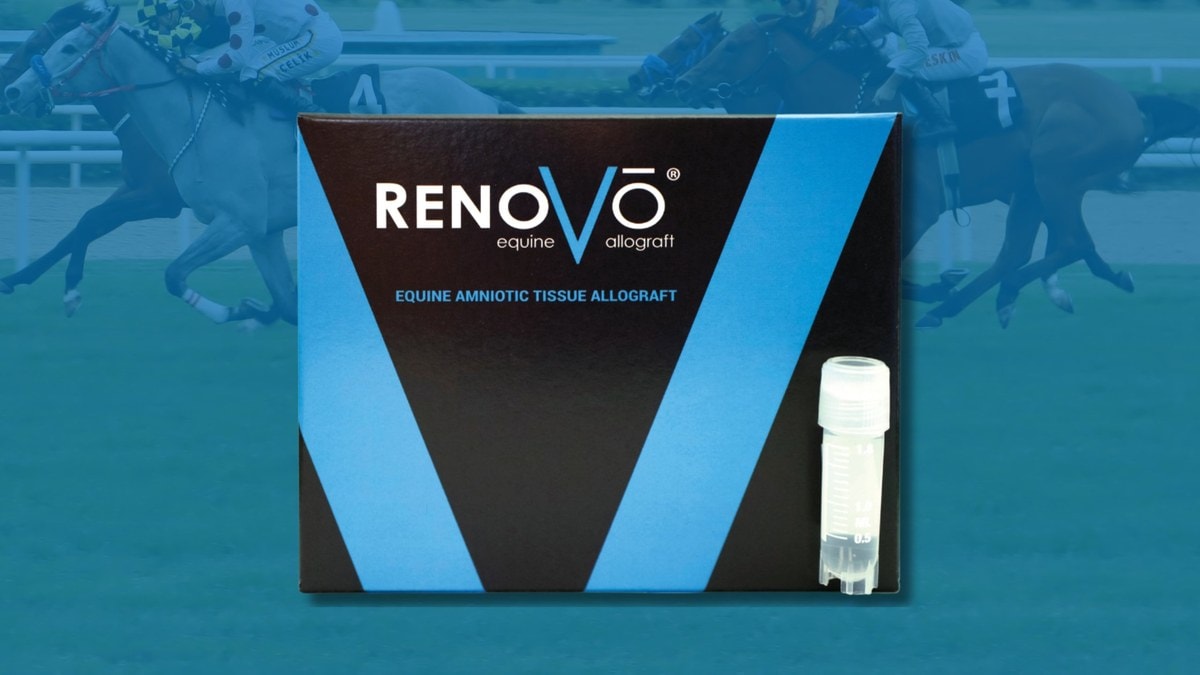
Many owners assume every amniotic product is a stem cell product. An acellular product contains no living cells. RenoVō®, for example, is an acellular, cryopreserved amniotic tissue allograft, not a stem cell product. Asking this question helps you understand exactly what your horse is receiving.
5. How is it prepared, and how does it fit our schedule?
Preparation time differs between options and can matter if you are hauling to a clinic or working around a competition schedule. A cryopreserved product is stored frozen and thawed at the clinic before use. Ask how many visits are involved and what care your horse will need in the days that follow.
6. What does the research show?
Ask what published studies exist for your horse’s type of injury, how many horses were included, and whether those horses were similar to yours in age, use, and injury. It also helps to know what kind of study it was. A controlled study compares treated horses with a group that received a different treatment or none. A field study reports outcomes in horses that received the same option in practice, often without a comparison group. Both are useful, but they answer different questions.
7. What are the risks, costs, and recovery timeline?
Ask which reactions are possible and what the full cost is, including rechecks, imaging, and rehabilitation. Ask when your horse will be reassessed, how you will both know whether the plan is on track, and what would make you change course. No option comes with a guaranteed result, and a clear timeline helps you know what to expect.
Quick Glossary
| Term | Meaning |
|---|---|
| Allograft | Tissue from a donor of the same species, not genetically identical |
| Autologous | Made from the patient’s own tissue, such as blood or bone marrow |
| Acellular | Contains no living cells |
| Cryopreserved | Stored frozen to preserve the tissue, then thawed before use |
| Field study | A study that follows horses receiving the same option in practice |
What Should You Bring to the Appointment?
- A timeline of when you first noticed a change
- Short videos of your horse working
- Your competition schedule and goals for the season ahead
- Records of previous injuries, medications, and shoeing changes
Where Does RenoVō® Fit?
RenoVō® is a liquid, acellular equine amniotic tissue allograft intended to supplement and protect tissues. It is available by prescription and administered only by a licensed veterinarian, who can help determine whether it may be beneficial based on your horse’s condition, medical history, and overall treatment plan. Results are not guaranteed. The product may not improve your horse’s condition, and there is a possibility of an adverse reaction with use of any biological product.
To learn more before your appointment, read What Is Amniotic Tissue Therapy for Horses, and Is It Safe? or visit our FAQs.
Frequently Asked Questions
Can I buy RenoVō® for my horse?
Owners cannot purchase RenoVō® directly. It is available by prescription only and is administered by a licensed veterinarian.
Find a Veterinarian Near You
The best next step is a conversation with a veterinarian who knows your horse. Find a veterinarian near you, bring these seven questions, and ask about RenoVō®.
This article is for educational purposes and is not a substitute for individualized veterinary advice. RenoVō® is available by prescription and administered only by a licensed veterinarian. Results vary by patient and are not guaranteed. Always refer to the RenoVō® Instructions for Use and consult a licensed veterinarian before pursuing any care.