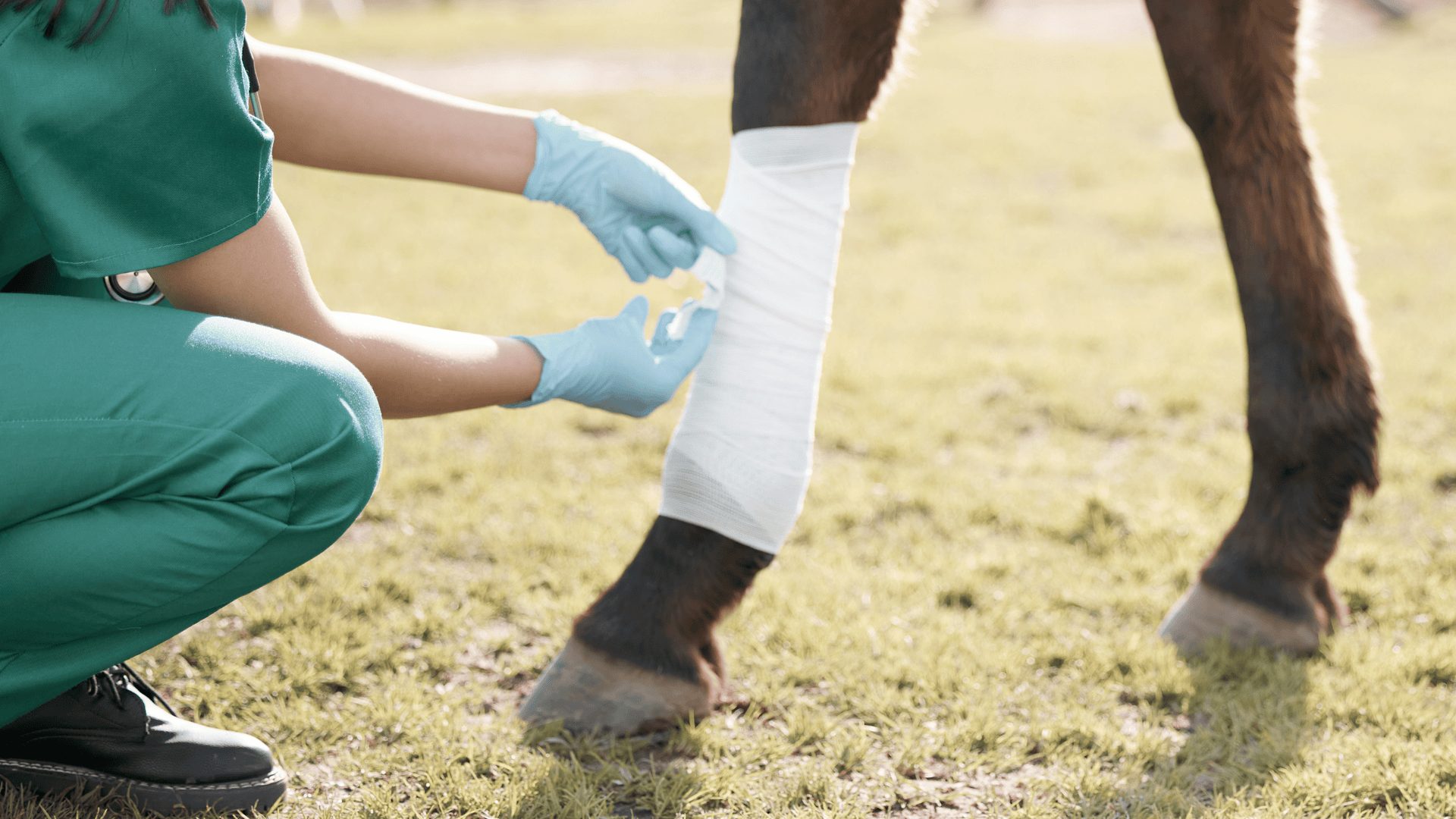
When your horse has an injury or condition that may benefit from additional support for healing, your veterinarian may discuss amniotic tissue therapy as an option. But what exactly is amniotic tissue, how does it work, and most importantly, is it safe for your horse?
Amniotic tissue products are derived from the tissues that surround and protect a developing foal during pregnancy. These tissues naturally contain proteins, growth factors, cytokines, chemokines, tissue matrix, hyaluronic acid, and other beneficial components associated with the body’s normal tissue repair and healing processes. One product example is RenoVō®, a liquid, acellular equine amniotic tissue allograft that has been used in over 35,000 horses to date. As with any biological product, safety depends on several factors, including how the tissue is recovered, processed, tested, and stored.
If your veterinarian has mentioned amniotic tissue, you probably have two questions. What is it, exactly? And is it safe for your horse? Here are plain answers to both.
What Is Amniotic Tissue?
During pregnancy, a foal develops inside a fluid-filled sac that provides protection and cushioning. Two important components are the amniotic membrane and amniotic fluid. The amniotic membrane is the thin innermost layer of that sac surrounding the developing foal, called the amnion. The liquid inside the sac that cushions and protects the foal throughout pregnancy is the amniotic fluid. Together, these tissues contain naturally occurring biological components including growth factors, cytokines, chemokines, amino acids, hyaluronic acid, and extracellular matrix proteins.
Amniotic membrane has a long history of use in humans, dating back more than 100 years.1 Today, it is used in applications such as wound care, eye injuries, tendon and ligament injuries, and osteoarthritis in both human and equine patients.2,3,4
When amniotic tissue is recovered from one horse and used in another horse of the same species, it is called an equine allograft. That sets it apart from autologous options such as PRP, IRAP, and stem cell therapy, which use biological materials collected from the horse’s own blood, bone marrow, or fat. RenoVō® is an equine amniotic tissue allograft made from the amniotic membrane and amniotic fluid recovered during a healthy live birth. The tissue is processed and the resulting product is supplied frozen and ready for veterinary use.
How Does Amniotic Tissue Therapy Work?
Amniotic tissues naturally contain growth factors and other biologically active factors recognized as part of the body’s complex tissue healing process. Supplementing tissue with these factors may help support the body’s response to tissue injury and may offer protection against further tissue damage. Laboratory testing has identified several of these factors in RenoVō®, including proteins associated with the regulation of inflammation, immune system modulation, and tissue regeneration. Your veterinarian can help determine whether an amniotic tissue product may be beneficial based on your horse’s condition, medical history, and overall treatment plan.
Is Amniotic Tissue Safe for Horses?
No biological product is free of risk, so the better question is what makes one product more trustworthy than another. These are the questions worth asking about any amniotic tissue product.
How was the tissue recovered? RenoVō® tissue is recovered from healthy mares during live birth by licensed veterinarians, without harm to the mare or foal.
Is it freeze dried or cryopreserved? Some amniotic products are lyophilized, or freeze dried, into a powder. Others are cryopreserved as a liquid. RenoVō® is processed aseptically, then cryopreserved and kept frozen until use to preserve proteins that may not survive freeze drying. Our article on cryopreserved liquid vs powder amnion products explains more.
Is it cellular or acellular? Cellular products contain living cells while acellular products contain no living cells. Understanding this distinction can help clarify what type of product your veterinarian is administering. RenoVō® is an acellular product, and its intended use does not depend on delivering living cells to your horse.
What research supports it? Ask what studies exist and where you can read them. Published research on RenoVō®, including a prospective field study and a joint safety study, is available in our clinical studies library. Our case study library shows how individual veterinarians have chosen to use RenoVō® in their clinical practices at their discretion.
What are the potential risks? Every horse is different, and results are not guaranteed. The product may not improve your horse’s condition, and there is a possibility of an adverse reaction with use of any biological product. This is not a complete list of risks, so ask your veterinarian to review the RenoVō® Instructions for Use with you and discuss any questions or concerns specific to your horse.
Questions to Ask Your Veterinarian
- Is my horse a good candidate for an amniotic tissue allograft?
- Is the product cellular or acellular?
- How is the tissue recovered, processed, and stored?
- What published research is available on this product?
- What are the potential benefits and risks for my horse?
- How will we evaluate whether the product is helping?
Frequently Asked Questions
Can I buy amniotic tissue for my horse?
Owners cannot purchase RenoVō® directly. It is available by prescription only and is administered by a licensed veterinarian, who decides whether it fits your horse’s care plan.
Where can I find a veterinarian who uses RenoVō®?
Use the Find a Vet map to locate a veterinarian near you and ask whether RenoVō® could be part of your horse’s care.
References
- Davis JW. Skin transplantation with a review of 550 cases at the Johns Hopkins Hospital. Johns Hopkins Med J. 1910;15:307.
- Liu J et al. Update on amniotic membrane transplantation. Expert Rev Ophthalmology. 2010 Oct;5(5):645-661.
- Gomoll A et al. Safety and efficacy of an amniotic suspension allograft injection over 12 months in a single-blinded, randomized controlled trial for symptomatic osteoarthritis of the knee. Arthroscopy. 2021 Jul;37(7):2246-2257.
- Outcome following local injection of a liquid amnion allograft for the treatment of equine tendonitis or desmitis – 100 cases. BMC Vet Res. 2022 Nov 7;18(1):391.
This article is for educational purposes and is not a substitute for individualized veterinary advice. RenoVō® is available by prescription and administered only by a licensed veterinarian. Results vary by patient and are not guaranteed. Always refer to the RenoVō® Instructions for Use and consult a licensed veterinarian before pursuing any care.