To read equine regenerative medicine research well, look past the abstract to three details: the study design, the number of horses in each group, and what was measured and by whom.
What Are the Main Study Types?
Study design sets the limit on what a study can show.
| Study type | What it can show | What it cannot show |
|---|---|---|
| Experimental safety study in healthy horses | How healthy tissue responds to a product in the short term | Outcomes in injured horses |
| Retrospective study | Patterns across existing medical records, often over many years | Cause and effect, because options were not randomly assigned |
| Prospective field study | Outcomes and adverse events in client-owned horses followed under a set protocol | Whether the product caused the outcome, when no control group is included |
| Randomized controlled trial | Whether the product itself makes a measurable difference | Results outside the population studied |
Why Does Sample Size Matter?
Small groups can miss real differences. Check the size of each group, not only the total. In a group of 7 horses, a single horse changes the result by approximately 14 percentage points. A finding of “no significant difference” in a small study means a difference was not detected, not that no difference exists.
What Are Endpoints?
An endpoint is the outcome the researchers measured to judge the result. Ask what was measured, since objective measures such as force plate data differ from subjective scores such as owner-reported return to work. Ask who measured it, since a blinded assessor reduces bias.
How Do These Principles Apply to RenoVō® Research?
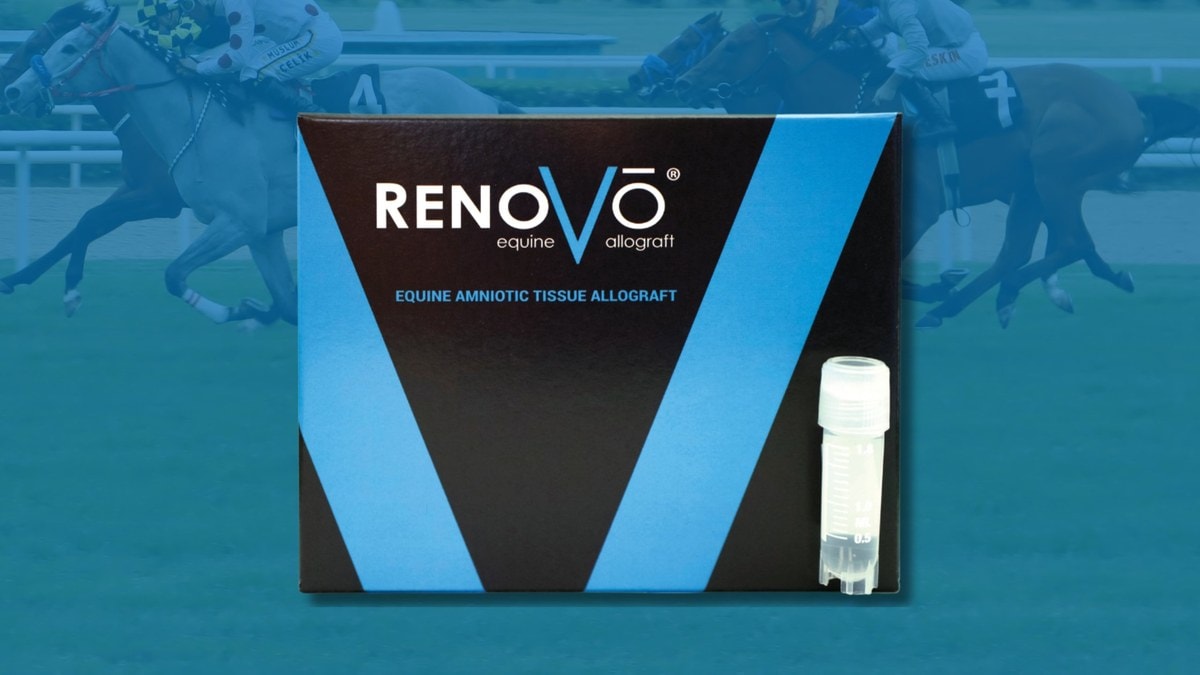
RenoVō® is a liquid, acellular equine amniotic tissue allograft intended to supplement and protect tissues. Its published research includes three designs.
| Study | Design | Horses | Main endpoints |
|---|---|---|---|
| Joint safety study1 | Randomized, blinded, placebo-controlled; each horse served as its own control | 8 healthy horses | Blinded lameness scores, force plate data, synovial fluid analysis through day 30 |
| Prospective multicenter field study2 | Prospective, multicenter, nonblinded, 14 sites; results compared with published literature | 100 horses with 128 tendon and ligament injuries | Return to work at a minimum of six months, reported by the attending veterinarian |
| Retrospective stifle study3 | Retrospective review of medical records, 2014 to 2022 | 34 western performance horses with stifle chondromalacia (27 with follow-up) | Owner-rated return to work by severity, distribution, and postoperative therapy |
The joint safety study found no difference in blinded lameness scores between joints that received RenoVō® and saline control joints. Synovial fluid cell counts increased on days 1 and 3 in joints that received RenoVō® and returned to normal by day 5, which the authors describe as a mild, subclinical inflammatory response. Additionally, an increase in IL-1ra, a potent anti-inflammatory cytokine, on days 1 and 3 after receiving RenoVō® was observed, suggesting that it may provide beneficial effects in inflamed joints.
The prospective multicenter field study reported that 72% of horses returned to or exceeded their previous level of work, and veterinarians reported satisfaction in 92% of cases. Adverse reactions, primarily swelling and redness, were reported in 13 horses. Because the study did not include a control group or blinding, the authors compared their results with published reports on other approaches, found them comparable, and recommended blinded, placebo-controlled studies.
The retrospective stifle study found that 74% of horses returned to athletic work and 44% returned to their previous level. Neither severity nor postoperative therapy choice was a significant predictor of return to work. The treatment groups were small, and therapy was selected by surgeon preference, so the authors note the comparison may not detect a real difference.
Why Veterinarians Choose RenoVō®
- Ready to use: No collection from the horse and no processing wait: thaw at the clinic and use.
- Cryopreserved, not freeze-dried: This preserves proteins that may not survive lyophilization.
- Processing: Processed in a cleanroom following current Good Tissue Practices (cGTP), the standard for human tissue processing.
- Published evidence: Three peer-reviewed papers across three study designs.
- Clinical experience: Used in over 36,000 horses to date.
Read the Full Studies
The methods and limitations sections are where the most useful details live. All three papers are available in the RenoVō® clinical studies library. To request study information or our case study booklet, contact our team.
References
- Wolkowski DD, et al. Effects of intra-articular injection of an acellular equine liquid amniotic allograft in healthy equine joints. Vet Surg. 2023;52:62–68.
- Duddy HR, Schoonover MJ, Hague BA. Outcome following local injection of a liquid amnion allograft for the treatment of equine tendonitis or desmitis: 100 cases. BMC Vet Res. 2022;18:391.
- Esselman AM, et al. Severity, distribution and postoperative therapy are not predictors of return to work in western performance horses with stifle chondromalacia. Vet Surg. 2025.
This article is for educational purposes. RenoVō® is available by prescription and administered only by a licensed veterinarian. Results vary by patient and are not guaranteed. Always refer to the RenoVō® Instructions for Use.