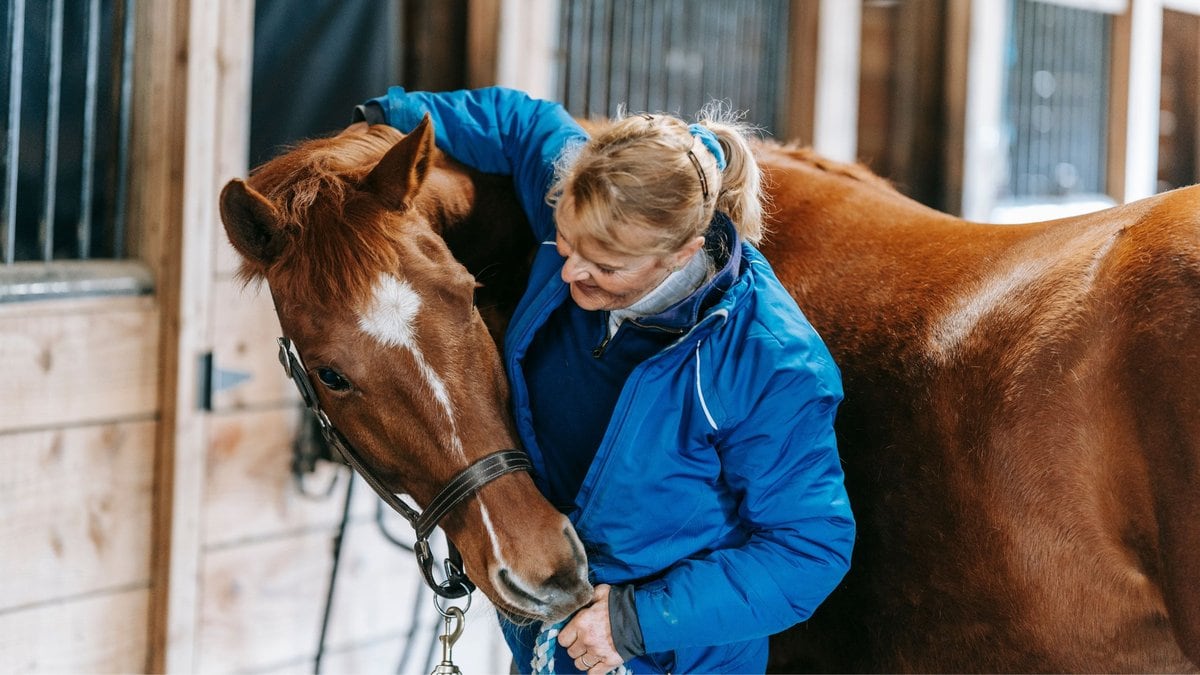
Western performance horses put heavy, repeated loads on their hind-end joints, especially the stifles and hocks. They do it at speed, on changing ground, across a long season. Joint health matters because the first sign of a problem is a small dip in performance, not obvious lameness. If you notice those changes early and share them with your veterinarian, a minor concern can be evaluated before it becomes a bigger one.
What Does a Rodeo Season Ask of a Horse?
Qualifying for the National Finals Rodeo is based on season earnings, and only the top 15 money earners in each event qualify. To get there, barrel racers often enter 75 to 95 rodeos in a season, and timed-event athletes often enter 65 to 75. Our post on how many rodeos it takes to qualify for the NFR explains more.
Each rodeo adds trailer hours, a new arena, new footing, and a run that asks for maximum effort. Add practice and the busy summer stretch known as Cowboy Christmas, and a top horse may travel thousands of miles in a single season.
Where Does the Load Land?
Western events ask a horse to drive from the hind end, stop hard, and turn tightly. Barrel racing loads the inside hind leg around each barrel. Roping and steer wrestling require explosive starts and hard stops. Cutting and reining add quick lateral moves, sliding stops, spins, and rollbacks.
The stifle is the horse’s equivalent of the human knee and one of the largest, most complex joints in the body. Hard stops and tight turns put both compressive and twisting forces on it, which can stress its cartilage and menisci.
The hocks compress like a spring each time the horse sits and pushes off. Riders often describe hock discomfort as a horse that feels flat, stiff, or less willing to drive from behind.
Soft tissues, including tendons and ligaments, absorb and return energy with every stride. When a joint is sore, the horse may change how it moves, shifting more load onto these structures.
What Are Early Signs of Joint Problems?
The earliest signs often show up in performance rather than obvious lameness. Make a note and contact your veterinarian if your horse:
- Runs wide, drops a shoulder, or stalls at a barrel it previously turned cleanly
- Resists stopping, or stops with less drive from behind
- Changes leads or avoids picking up a lead
- Takes longer than usual to warm up
- Shows a shorter stride behind or drags a hind toe
- Has swelling or puffiness around the stifle or hock
- Pins its ears, wrings its tail, or resists saddling
These signs do not point to one specific problem. Your veterinarian may use flexion tests, diagnostic blocks, radiographs, ultrasound, or arthroscopy to determine the source. Short videos of recent runs and notes on when you first noticed the change can be helpful at the appointment.
What Does Research Show About Stifle Chondromalacia in Western Horses?
Chondromalacia is softening of the articular cartilage, the smooth layer that covers the ends of the bones inside a joint. In the stifle, it is usually confirmed during arthroscopy.
A 2025 study in Veterinary Surgery reviewed records for 34 western performance horses diagnosed with stifle chondromalacia, with follow-up available for 27 horses1. The researchers reported that:
- 74% of horses returned to athletic work, and 44% returned to their previous level
- Average time to return was approximately 6 months, ranging from 3 to 24 months
- The severity of cartilage softening was not a significant predictor of return to work
- Postoperative therapy choice, including bone marrow-derived stem cells, an amniotic allograft, or no additional therapy, was not a significant predictor of return to work
The authors note that the study was retrospective, involved small treatment groups, and relied on owner-reported outcomes. Our summary, Rethinking Equine Stifle Injuries, explains the findings in more detail.
For riders, the takeaway is that a chondromalacia diagnosis is not automatically the end of a career, and the grade alone does not determine the outlook. But fewer than half of the horses returned to their previous level, which is why realistic expectations and a structured rehabilitation plan matter.
How Can You Plan for Joint Health With Your Veterinarian?
A strong plan covers the full season, not only an injury. Topics to discuss include a soundness exam before the season begins, rest between hauls and runs, conditioning for core and hind-end strength, footing and farrier care, and a structured rehabilitation plan with regular rechecks if an injury is diagnosed.
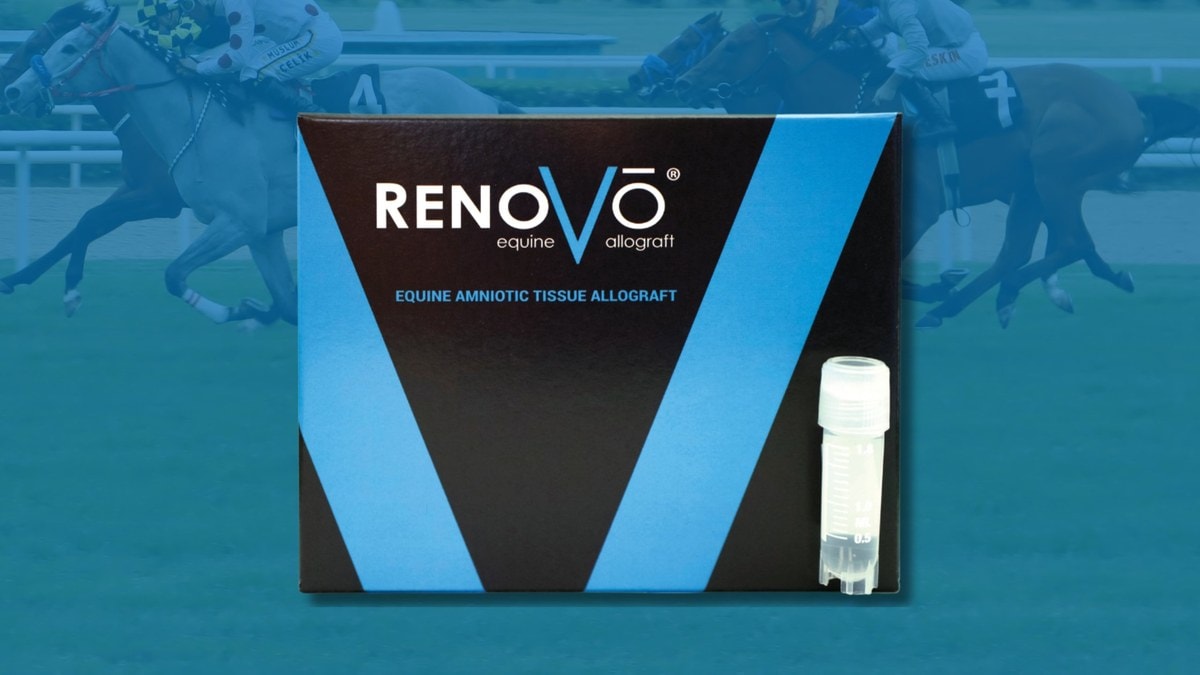
Depending on the diagnosis, your veterinarian may also discuss options such as PRP, stem cells, or an amniotic tissue allograft. RenoVō® is a liquid, acellular equine amniotic tissue allograft intended to supplement and protect tissues. It is available by prescription and administered only by a licensed veterinarian, who can help determine whether it may be beneficial based on your horse’s condition, medical history, and overall treatment plan.
Frequently Asked Questions
What is chondromalacia in horses?
Chondromalacia is softening of the cartilage that lines a joint. In horses, it is often identified in the stifle during arthroscopy.
Can a horse with stifle chondromalacia return to work?
In a 2025 study of western performance horses, 74% returned to some level of work and 44% returned to their previous level. Outcomes vary, and your veterinarian can discuss what to expect for your horse.
Talk With a Veterinarian Before the Next Run
If your horse feels different, have it evaluated early. Find a veterinarian near you and ask about RenoVō®.
References
- Esselman AM, Johnson SA, Hague BA, Frisbie DD. Severity, distribution and postoperative therapy are not predictors of return to work in western performance horses with stifle chondromalacia. Vet Surg. 2025.
This article is for educational purposes and is not a substitute for individualized veterinary advice. RenoVō® is available by prescription and administered only by a licensed veterinarian. Results vary by patient and are not guaranteed. Always refer to the RenoVō® Instructions for Use and consult a licensed veterinarian before pursuing any care.