4

Back to all posts

RenoVō® CASE STUDY: Hoof Injury

By Bree Valensin, DVM

As equine veterinarians, we are often faced with navigating an overwhelming marketplace of biologics, supplements, and adjunctive therapies, each with varying levels of efficacy and practicality. In an industry saturated with countless products promising specialized benefits, finding something that genuinely delivers across multiple disciplines of care is rare.

RenoVō® has become one of those tools in my practice.

While many regenerative products are traditionally associated with soft tissue injury or joint maintenance alone, I have found RenoVō® demonstrates clinical utility far beyond those conventional applications. I have incorporated it into a wide range of therapeutic protocols, including ophthalmic support, nebulization therapy, and intravenous administration aimed at promoting overall systemic wellness and recovery. Having a single therapeutic option that is both accessible and adaptable across so many areas of care has proven truly invaluable.

What distinguishes RenoVō® most is its ability to integrate the most beneficial qualities of numerous regenerative and supportive therapies into one refined product. It simplifies that landscape without compromising clinical performance. Throughout my experience utilizing it in practice, I have observed meaningful improvements not only in recovery and athletic longevity, but also in the overall vitality and long-term health of my equine patients.

Perhaps most significantly, RenoVō® has proven especially valuable in the management of aging horses and those affected by metabolic conditions where corticosteroid use may be limited or contraindicated altogether. These patients often require a far more nuanced and conscientious treatment strategy. Having a therapy that supports healing, comfort, and physiologic resilience without heavy reliance on steroids has been extraordinarily beneficial. Witnessing these horses maintain soundness, comfort, and quality of life well into their later years has been deeply rewarding.

To me, RenoVō® represents far more than a therapeutic product. It is an investment in the longevity, wellness, and sustained performance of the horses entrusted to our care.

About the Author

Bree Valensin, DVM is an equine veterinarian based in Weatherford, Texas and founder of Valensin Equine. She earned her veterinary degree from Midwestern University in Phoenix and brings extensive experience working with performance horses. She has incorporated RenoVō® into her therapeutic protocols at her discretion across a wide range of equine cases.

RenoVō® is a liquid, acellular, equine amniotic tissue allograft comprised of amnion and amniotic fluid, intended to supplement and protect tissues. Clinical decisions regarding its use are made at the discretion of the attending veterinarian.

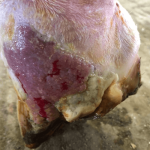
 Equine Regenerative Therapy Case Study Hoof Injury Image 1: Image showing hoof injury of horse that was treated with antibiotics and casted for 2 weeks. The injury persisted and showed sign of infection. Case presentation: On June 6, 2018, a Long yearling Quarter Horse race horse kicked a weak beam of a stall and tore his left front hoof as he was pulling back. The horse was treated with antibiotics and casted for 2 weeks. The injury persisted and showed sign of infection. On June 25, 2018, 3.0 cc of RenoVō ® allograft was implanted at the discretion of the veterinarian around the lesion and distributed subcutaneously around the wound edges.
 

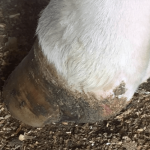
Equine Regenerative Therapy Case Study Hoof Injury Image 2: Image 1 week after a 3.0 cc of RenoVō ® allograft was implanted at the discretion of the veterinarian around the lesion and distributed subcutaneously around the wound edges.On July 3, 2018, only 1 week following the implantation of RenoVō ®, the infection resolved, the wound was re-epithelizing and had significantly decreased in size. Standard wound dressing, with bandage changes was performed as needed by the owner at the recommendation of the attending veterinarian.
 

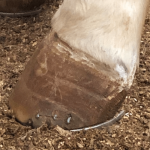
Equine Regenerative Therapy Case Study Hoof Injury Image 3: Image 6 weeks after a 3.0 cc of RenoVō ® allograft was implanted at the discretion of the veterinarian around the lesion and distributed subcutaneously around the wound edges.On August 15, 2018, 6 weeks later, the wound was healed, and the hoof wall and sole were growing back.


Equine Regenerative Therapy Case Study Hoof Injury Image 3: Image 8 months after a 3.0 cc of RenoVō ® allograft was implanted at the discretion of the veterinarian around the lesion and distributed subcutaneously around the wound edges.On February 21, 2019, : 8 Months following the RenoVō ® implantation, the hoof injury was completely resolved. The horse had grown back a strong and healthy hoof. VF Blood Brothers has been back to racing again and has won multiples races.